
Vaccine Allergies
Vaccines are one of the most effective ways for preventing serious illness. But certain ingredients trigger an allergic reaction ranging from mild skin symptoms to more severe immune responses that require prompt attention. Southwest Asthma and Allergy Associates offers personalized care for vaccine allergies in children and adults to make sure they continue to receive the vaccinations as safely as possible.
Request Your Appointment
Have Questions? – How can we help!
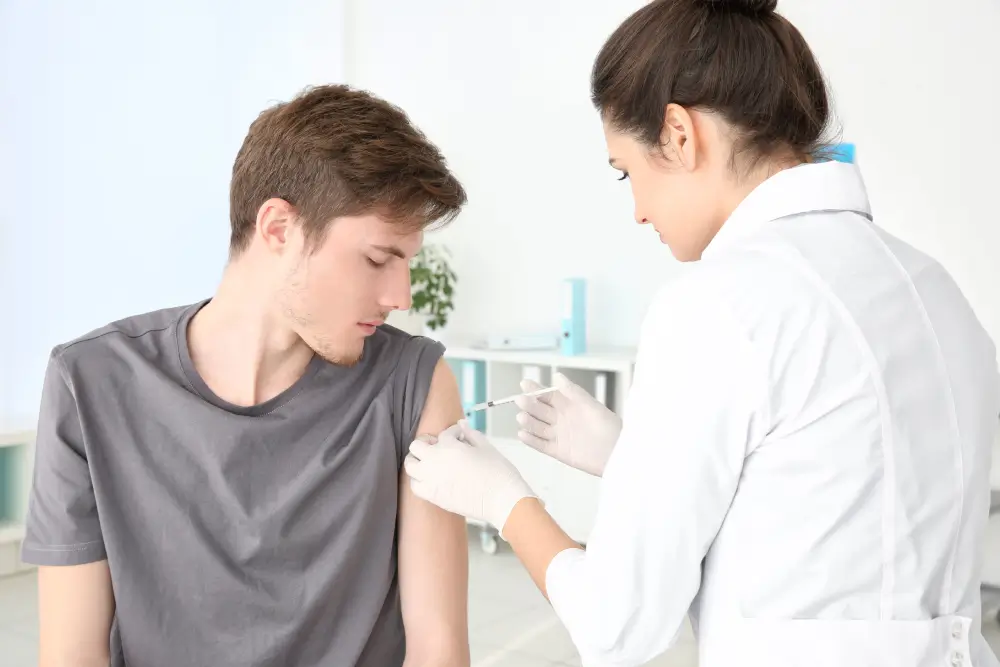
Symptoms of Vaccine Allergies
Symptoms of a vaccine allergy may appear within minutes to hours after vaccination and can vary in severity. Following are the symptoms:
- Hives or itchy skin
- Rash or redness
- Swelling of the face, lips, or tongue
- Wheezing or shortness of breath
- Persistent coughing
- Nausea or vomiting
- Dizziness or fainting
- Rapid heartbeat
- Throat tightness
- Anaphylaxis
Diagnostic Approach and Clinical Process
The process begins with a thorough review of your medical history, past vaccine reactions, and known allergies to accurately identify potential triggers.
Skin Prick Testing
Selected vaccine components or allergens are applied in small amounts to the skin, under specialist supervision. The test can be used to determine what allergens may be causing allergic reactions.
Graded Vaccine Challenge
For patients with uncertain allergy history, we perform supervised graded challenges. This involves giving small doses under close medical supervision.
Intradermal Testing
When skin prick tests are not conclusive, intradermal testing is performed by injecting small amounts of vaccine material under the skin. It is a more sensitive test that can detect weaker allergic responses and gives a comprehensive identification of ingredients.
Any Questions About Vaccine Allergies?
Treatment
When a true vaccine allergy is suspected or diagnosed, management is divided into two clinical scenarios: acute emergency treatment and preventative management protocols.
Since vaccine allergies are triggered by residual proteins or preservatives (excipients), treatments are highly specialized and managed by board-certified allergists.
Immediate Acute Treatments
When an allergic reaction occurs after a vaccine, the immediate priority is to stop the immune response before it escalates. Vaccination sites are legally required to have the following treatments on hand.
Epinephrine
In cases of severe allergic reactions such as anaphylaxis, epinephrine works by increasing blood pressure, opening the airways, and improving breathing.
Antihistamines
They are often prescribed to treat mild allergic reactions, such as hives, swelling and skin redness.
Corticosteroids
Taken orally or intravenously to address a serious allergic response that persists or when secondary reactions are expected.
Bronchodilators
When wheezing begins, indicating the onset of breathing problems from asthma, albuterol is inhaled.
Long-Term Protocols for Future Vaccinations
If a patient has a known allergy to a vaccine but needs additional doses, allergists have special protocols in place to safely give the vaccine.
Desensitization Therapy
When a vaccine is necessary in a patient with a suspected or confirmed allergy, our allergists may use supervised protocols such as graded vaccine challenges or desensitization. In a graded challenge, increasing doses are given under close medical supervision to assess tolerance. In selected cases, desensitization may be used to allow safe temporary administration of the vaccine.
Excipient/Ingredient Testing & Alternative Selection
Vaccine reactions are often triggered by excipients such as gelatin, polyethylene glycol, polysorbate, or egg proteins. Component testing identifies the specific allergen and allows clinicians to suggest a different formulation or brand that does not contain the allergen.
Explore More Services
Why Choose SWAAA for Vaccine Allergy Care
Patient Stories
What Our Patients Has To Say
From the front desk to seeing Dr. Chou, everyone was great. The wait time wasn’t bad and we were attended well.
Dulce Betancourt
★★★★★I've been going to this office for several years and I have had the best experience with everyone here. Dr Chou is the best. He is patient and he listens.
Quanah R
★★★★★I've been coming here for 15 years and it been excellent I wouldn't trade them for nothing in the world it be like a family to me go in there
Carolyn Stewarthxygd
★★★★★I've been coming here for years now and it's a wonderful office. Doctors, nurses, and staff all really care and are great to interact with.
Brandon Garcia
★★★★★I’ve been bringing my daughter to see Michael Chou for years, and he’s absolutely the best! I always recommend him to anyone looking for exceptional allergy care for their kids.
Ari D
★★★★★Frequently Asked Questions
Yes. Allergists assess the risks involved and provide you with safe vaccination protocols, which may involve graded challenges or using alternate vaccines.
Not necessarily. Food allergy doesn’t always indicate that one is allergic to vaccines. But if the vaccine contains any related proteins or additives, consultation from an allergist might be required.
Vaccine-related allergies are usually caused by certain allergens present in vaccines, including PEG, gelatin, polysorbates, egg protein, latex, and antibiotics used in vaccines.
Schedule Your Consultation Today!
If you or your child is experiencing vaccine allergies, visit Southwest Asthma & Allergy Associates for professional assistance and medical care.