
Pulmonary Function Testing
Pulmonary function testing measures how well the lungs work, checking airflow and breathing capacity along the way. Doctors may use this testing to look at breathing signs linked to asthma and other lung problems. Test results work best when read along with a full health history and a hands-on exam. Southwest Asthma & Allergy Associates offers pulmonary function testing for patients across the Houston area who need it.
Request Your Appointment
Have Questions? – How can we help!
When is Pulmonary Function Testing Recommended?
We may suggest testing when your signs or health history point to a possible breathing or lung problem, and our providers look at findings before making this call.
- Shortness of breath
- Persistent or recurring cough
- Wheezing
- Chest tightness
- Difficulty breathing during exercise
- Reduced exercise tolerance
- Recurrent breathing symptoms
- Suspected asthma
- Tracking known asthma
- Evaluating unexplained breathing problems
Not everyone with breathing symptoms needs pulmonary function testing. The choice depends on your age, your signs, your medical history, and your physical exam.
What Does Pulmonary Function Testing Measure?
Breathing tests show the movement of air into and out of the lungs and the overall function of the lungs:
Airflow
Airflow testing measures how quickly and effectively air moves through the airways. It can help identify airflow obstruction and may support an asthma evaluation when considered alongside symptoms and other clinical findings.
Lung Volumes
Tests for lung volumes allow us to see how much air your lungs are able to contain. This will give us an idea of your breathing ability. We will carry out this test depending on your symptoms.
Breathing Efficiency
The test evaluates your ability to inhale and exhale air with every single breath. The test may reveal your breathing symptoms and will be analyzed by our doctors with other tests.
Any Questions About Pulmonary Function Testing?
Our Pulmonary Function Testing Process
Our lung function testing starts with a look at your signs and health history, which helps show which breathing tests may fit your case best.
Medical History Review
We begin by asking about your breathing symptoms and when they started. It’s also helpful to know how often they happen and if physical activity makes them worse. Relevant health information such as a prior diagnosis of asthma and nighttime symptoms is included in this review. We will also ask you about your smoking history, current medications and any breathing tests you have had before.
Physical Examination
A hands-on exam helps our doctors understand your signs before any testing gets started that day. This step covers a general breathing check along with a close look at your lungs and airway. They also watch how you breathe during the visit itself. When needed, they check your oxygen level or other indicators that may guide your care.
Spirometry
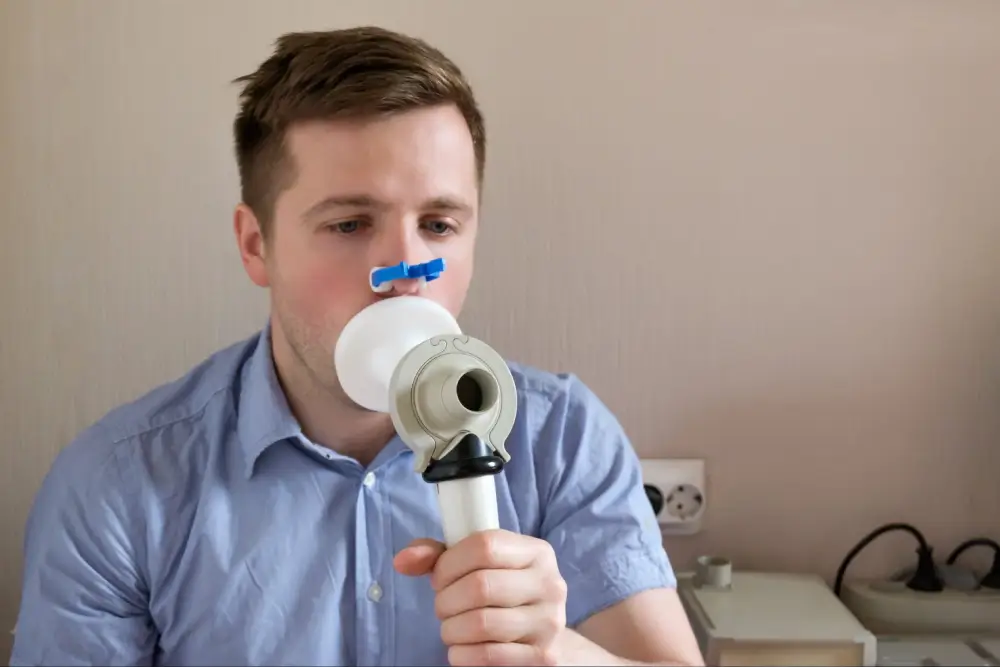
Spirometry is a common and simple lung function test used in our clinic. During this test, you blow into a small machine known as a spirometer that will measure the volume of air that you breathe out and how fast you can do that. This helps show airflow limits and is often used to check for asthma.
Bronchodilator Response Testing
Our providers may use this test to see how your breathing responds to treatment when appropriate for your symptoms. During this visit, it compares your results before and after you take a bronchodilator (a medicine that opens your airways) to see if the medicine makes a difference. These results can provide helpful clues as our doctors work through an asthma evaluation.
Additional Lung Function Testing
Some patients need more testing beyond a standard spirometry test, depending on their signs and needs. FeNO (fractional exhaled nitric oxide) tests and oscillometry are a few added options. Not every patient needs every test, and our provider will recommend what fits your situation.
Understanding Your Results
We look at your results along with your signs and full health history together. Unusual results by themselves do not always point to one clear cause right away. Still, these results can help guide what happens next as part of your care. Our specialists will explain what the numbers mean, and may suggest more testing if needed.
Conditions Evaluated With Lung Function Testing
Pulmonary function testing may help look into several breathing concerns you might have over time. The right use depends on your signs and your overall health at that moment.
Asthma
- Supporting an asthma diagnosis
- Checking airflow limits
- Looking at symptom control
- Tracking lung function over time
Chronic Cough
- Checking breathing function when a cough will not go away
- Looking for airflow problems tied to the cough
- Considering asthma and other possible causes
Exercise-Related Breathing Problems
- Shortness of breath during physical activity
- Wheezing during or after exercise
- Reduced exercise tolerance over time
- Testing when it fits your case
Other Breathing Conditions
- Evaluating unexplained breathing symptoms
- Tracking known breathing conditions over time
- Deciding whether more lung testing may help
Pulmonary function testing does not find every breathing condition on its own, so it works best as one part of a full checkup with our doctors.
What Happens After Pulmonary Function Testing?
After testing ends, our physicians look over the results and talk through the next steps with you in person.
Reviewing Your Results
Our doctors go over the test findings and compare them closely with your signs from the start. They explain what the numbers mean using everyday terms you can follow. This conversation helps show whether you may need more testing later.
Treatment Planning
Based on your results, we may suggest asthma treatment or change your current medicine plan. Managing known triggers is often a key part of this plan. Some patients need more testing, or a referral for further lung care.
Ongoing Monitoring
Some patients need repeat testing over time to monitor changes in lung function and evaluate how well treatment is working. This helps track lung function and shows how well the treatment is working. Our providers update your care plan based on your signs and results.
Explore More Services
Why Patients Choose Our Pulmonary Function Testing Services
Southwest Asthma & Allergy Associates has more than 40 years of experience in asthma and lung care. We offer personal care and treatment plans built for both children and adults alike. Lung function testing is one part of the full breathing care we provide our patients. Our team works with patients across many locations near the Houston area.
We work with leading insurance providers so quality health care is within everyone’s reach.
Patient Stories
What Our Patients Has To Say
From the front desk to seeing Dr. Chou, everyone was great. The wait time wasn’t bad and we were attended well.
Dulce Betancourt
★★★★★I've been going to this office for several years and I have had the best experience with everyone here. Dr Chou is the best. He is patient and he listens.
Quanah R
★★★★★I've been coming here for 15 years and it been excellent I wouldn't trade them for nothing in the world it be like a family to me go in there
Carolyn Stewarthxygd
★★★★★I've been coming here for years now and it's a wonderful office. Doctors, nurses, and staff all really care and are great to interact with.
Brandon Garcia
★★★★★I’ve been bringing my daughter to see Michael Chou for years, and he’s absolutely the best! I always recommend him to anyone looking for exceptional allergy care for their kids.
Ari D
★★★★★Frequently Asked Questions
Pulmonary function testing is not painful for most people who come in for it. Some tests do involve forceful breathing, which can feel tiring for a short time.
Most lung function tests take about fifteen to thirty minutes to complete from start to finish. The exact length depends on which specific tests our specialists decide to run.
It depends on the type of test and the specific guidance we give you beforehand. Always follow the guidance our providers share with you before your visit.
Schedule Your Appointment Today!
If you have breathing signs that keep coming back, testing may help find out why they happen. Southwest Asthma & Allergy Associates offers pulmonary function testing for patients across Houston. Contact us today to book a visit and take a step toward better breathing.