
Hives
Hives, also known as urticaria, happen when your skin reacts to something, causing itchy welts to appear. They can show up out of nowhere and move around your body within hours. Some people deal with a single episode that clears up on its own. Others get outbreaks that keep coming back for weeks or even months. Figuring out what sets off your symptoms is the first step toward getting them under control.
At Southwest Asthma & Allergy Associates, we help patients track their triggers and find a treatment plan that works.
Request Your Appointment
Have Questions? – How can we help!
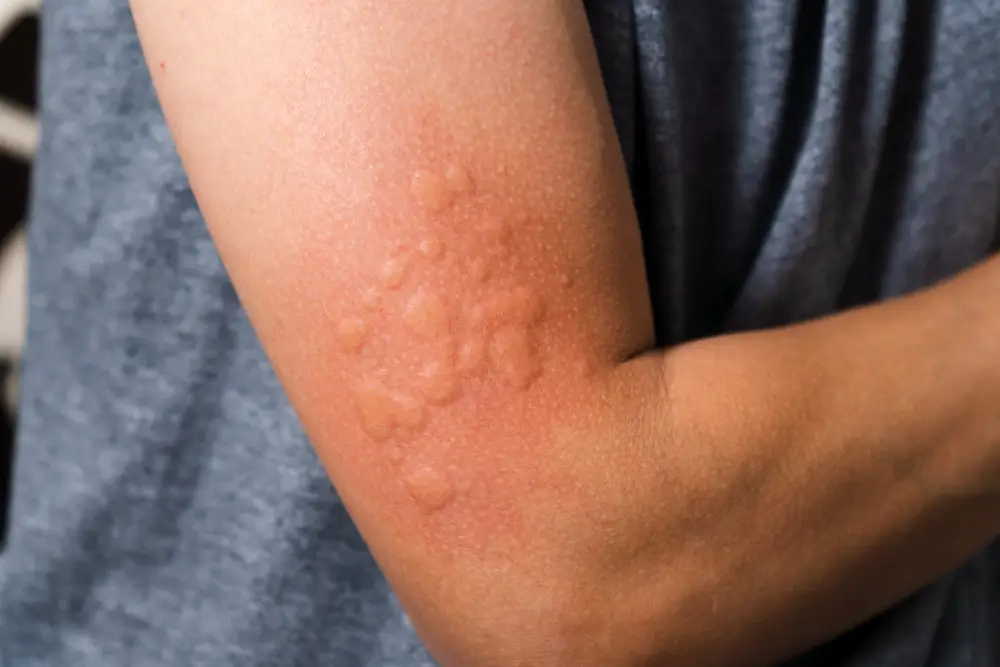
Common Symptoms of Hives
Symptoms tend to show up fast and without warning. How they look and feel can vary from person to person; common signs to look for:
- Raised, itchy welts
- Red, pink, or skin-colored bumps
- Swelling that changes location
- Burning or stinging sensation
- Individual hives that disappear within 24 hours
- Recurring outbreaks
- Swelling of the lips or eyelids (when present)
- Symptoms that worsen with heat or pressure
- Sleep disruption caused by itching
- Episodes lasting days or recurring for weeks
Causes and Triggers of Hives
Many different factors can trigger an outbreak of hives. Sometimes the cause is obvious and other times a careful evaluation is needed.
Allergic Reactions
- Foods
- Medications
- Insect stings
- Latex
Infections
- Viral infections
- Bacterial infections
- Recent illnesses
Physical Triggers
- Heat
- Cold
- Pressure
- Exercise
- Sunlight
Other Contributing
- Factors
- Stress
- Autoimmune conditions
- Unknown causes (idiopathic hives)
Any Questions About Hives?
Comprehensive Evaluation for Hives
Before starting treatment, we conduct a comprehensive evaluation to understand why your hives occur, then recommend a plan tailored to your needs.
Medical History Review
We look at your health history to find out the cause. We examine past treatments, food reactions, family history, and recent illnesses to find answers.
Physical Examination
Our specialists examine your skin, noting the size, shape, and location of your hives. They also look for swelling of deep tissues known as angioedema.
Allergy Evaluation
If allergies are suspected based on your history, we may recommend allergy testing to help identify possible triggers.
Additional Testing
Sometimes we need blood tests for detailed evaluation. The tests help us to detect any health problems that might be causing your symptoms. We can refer you to a specialist for further evaluation if necessary.
Personalized Care Plan
Once the diagnosis is completed, we create a care plan based on your condition. This includes verifying the diagnosis, finding out what the triggers may be, and developing a treatment plan. We also plan for follow-up visits to track how things are going over time.
Treatment Options
No two patients respond the same way, so we shape the treatment plan to fit the person in front of us.
Symptom Relief
- Antihistamines
- Itch management
- Reducing skin irritation
Trigger Management
- Avoiding known allergens
- Medication review
- Lifestyle changes
Managing Chronic Hives
- Long-term treatment strategies
- Monitoring recurring symptoms
- Treatment adjustments when needed
Follow-Up Care
- Regular check-ins
- Monitoring how treatment is working
- Updating care plans over time
Explore More Services
Accessible Care for Everyone
Southwest Asthma & Allergy Associates has been helping patients with allergy and skin problems for over 40 years. We use that experience to give every patient a careful review and a treatment plan based on real results.
To serve every patient with quality care, we collaborate closely with major insurance providers.
Patient Stories
What Our Patients Has To Say
From the front desk to seeing Dr. Chou, everyone was great. The wait time wasn’t bad and we were attended well.
Dulce Betancourt
★★★★★I've been going to this office for several years and I have had the best experience with everyone here. Dr Chou is the best. He is patient and he listens.
Quanah R
★★★★★I've been coming here for 15 years and it been excellent I wouldn't trade them for nothing in the world it be like a family to me go in there
Carolyn Stewarthxygd
★★★★★I've been coming here for years now and it's a wonderful office. Doctors, nurses, and staff all really care and are great to interact with.
Brandon Garcia
★★★★★I’ve been bringing my daughter to see Michael Chou for years, and he’s absolutely the best! I always recommend him to anyone looking for exceptional allergy care for their kids.
Ari D
★★★★★Frequently Asked Questions
Acute hives often clear up within a few days to a few weeks. Chronic hives last longer than six weeks and may come and go for months. How long they stick around depends on the cause and how your body responds to treatment.
Acute hives come on fast and usually have a clear trigger like food, medication, or illness. Chronic hives stick around for six weeks or longer, often without an obvious cause.
Hives combined with swelling of the tongue or throat, difficulty breathing, dizziness, or rapid heartbeat may be signs of anaphylaxis, a life threatening reaction. Call 911 or go to the nearest emergency room immediately.
Schedule Your Appointment Today!
If you are struggling with persistent hives, the clinical team at Southwest Asthma & Allergy Associates is ready to help. Call our office today or request an appointment online.